
Mon-Fri (8am-8pm) / Sat & Sun (8am-6pm)
Mon-Fri (8am-8pm) / Sat & Sun (8am-6pm)
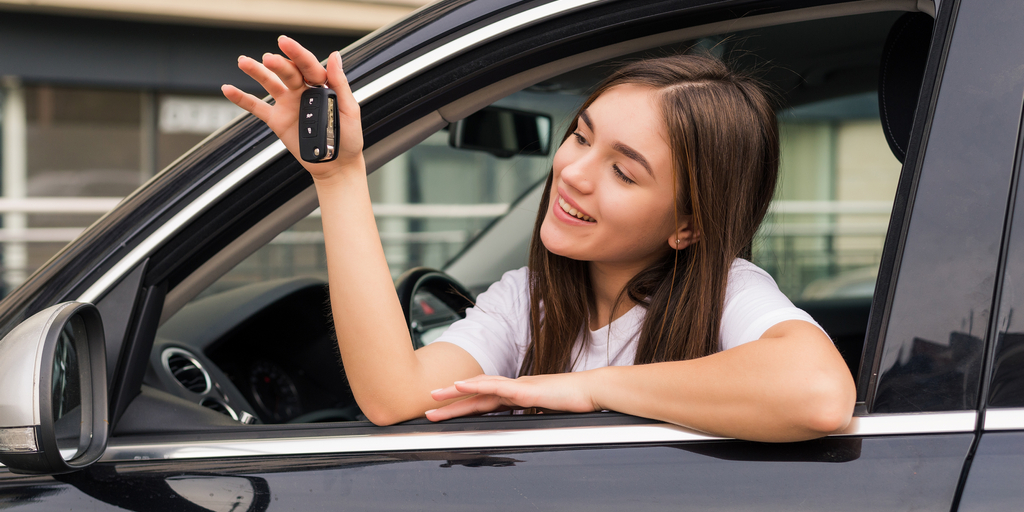
Buy a compact or midsize car, or a small SUV, with a modest base engine. Look for a curb weight of at least 2,750 pounds, electronic stability control, and automatic emergency braking. Skip minicars, sports models, and full-size trucks. In short, choose a car heavy enough to protect your teen and tame enough not to tempt them.
The stakes explain the strictness. Teen drivers are about three times as likely as drivers 20 and older to die in a crash. That figure comes from the Insurance Institute for Highway Safety (IIHS), which publishes an annual teen vehicle list with Consumer Reports. We lean on that research throughout this guide, because it beats guessing from a dealership lot.
Start with weight. IIHS recommends a curb weight of at least 2,750 pounds, which rules out every minicar and some small cars. In a crash with a heavier vehicle, the lighter one absorbs more of the damage. Families often pick small cars because they feel easier for a beginner, but crash physics doesn’t care how easy a car is to park.
Next, confirm the crash-protection basics. Electronic stability control has been required on most passenger vehicles since the 2012 model year, so skip anything older than that. For a used car, IIHS wants a good rating in its driver-side small overlap test. It also suggests four or five stars from the National Highway Traffic Safety Administration (NHTSA). Look up the exact model year, because ratings change between generations.
Then look for crash-avoidance technology. An IIHS study looked at automatic emergency braking (AEB), lane departure prevention, and blind spot monitoring. It found they could be relevant to about a third of teen driver deaths and a quarter of injuries. Teens get distracted easily and misjudge following distances, so these systems cover the exact gaps that inexperience creates. If the car you like lacks AEB, IIHS says an aftermarket collision warning system can help.
Finally, check the headlights. IIHS began rating them in 2016, and nighttime crash rates are substantially lower for vehicles with good or acceptable ones. That matters here in Georgia, where your teen must log at least six night hours before applying for a Class D license.
Four kinds of vehicle fail, each for a different reason. Minicars and anything under 2,750 pounds can’t protect occupants well against bigger vehicles. Sports cars and performance trims invite teens to test limits. Large SUVs and full-size pickups are harder to handle, take longer to stop, and put pedestrians and smaller cars at greater risk. The fourth category is simply too old: a car that predates stability control skips the technology teens need most.
The horsepower trap catches careful parents too. Many ordinary models come in high-horsepower versions, and IIHS advises sticking with the base engine even when shopping from its own list. Powerful vehicles can entice young drivers to take risks or lead them to speed without noticing. When you shop, ask for the trim and engine, not just the model name.
Electric vehicles need a separate conversation. They’re no less safe than gas-powered cars, and several appear on the IIHS list. But electric motors deliver full power instantly, so IIHS tells parents to keep that rapid acceleration in mind. If you choose an EV, practice gentle throttle control in an empty lot before the first real drive.
IIHS and Consumer Reports updated their joint teen list in May 2026. It includes 45 used vehicles starting under $10,000 and 29 more starting under $20,000 with highly rated headlights and pedestrian-detecting AEB. For families buying new, 22 models made the cut. Every one clears the weight, handling, and crash-test bars described above.
| Model | Years | Starting price* | IIHS tier |
|---|---|---|---|
| Nissan Sentra | 2015–25 | $4,700 | Good Choice |
| Hyundai Elantra | 2017–25 | $6,100 | Good Choice |
| Subaru Impreza (sedan or wagon) | 2014–25 | $8,000 | Good Choice |
| Honda Civic (coupe or sedan) | 2014–25 | $8,100 | Good Choice |
| Kia Forte | 2019–24 | $8,900 | Good Choice |
| Mazda CX-5 | 2018–25 (built after March 2018) | $13,100 | Best Choice |
| Mazda3 | Hatchback 2019–25; sedan 2020–25 | $13,200 | Best Choice |
| Subaru Forester | 2019–25 | $15,900 | Best Choice |
| Toyota Camry (incl. hybrid) | 2019–25 | $17,300 | Best Choice |
| Hyundai Tucson (incl. hybrid) | 2022–25 | $19,100 | Best Choice |
*Median retail price, April 2026, for the oldest eligible model year (Black Book via IIHS). Newer years cost more.
Read the table with two cautions in mind. Good Choices pass the crash and handling screens but don’t guarantee AEB, so check each car’s equipment. Some entries also qualify only if built after a certain date, which you can confirm on the certification label near the driver door. Best Choices add standard AEB with pedestrian detection and good or acceptable headlights across all trims.
On the new side, 2026 picks starting under $45,000 include the Mazda3, Toyota Prius, Hyundai Sonata, Toyota Camry, Hyundai Tucson, and Mazda CX-30. These are Top Safety Pick or Top Safety Pick+ winners that also earn a Consumer Reports Safety Verdict of Best. The full IIHS page also covers larger SUVs, so check it before you shop.
Used makes sense for most budgets, and the IIHS list shows you can stay safe without a new-car payment. A used Best Choice comes with standard AEB and decent headlights, which covers much of what a new car adds for a teen. We would also look in your own driveway first. IIHS notes that a good option may already be sitting in your garage.
If you can afford new, IIHS and Consumer Reports suggest buying the most advanced safety available. That means a 2026 Top Safety Pick or Top Safety Pick+ winner with a Consumer Reports Safety Verdict of Best, which adds highway-speed AEB, blind spot warning, and rear cross traffic warning. These vehicles also earn good seat belt reminder ratings. That matters because IIHS notes that young drivers are less likely to buckle up than others.
It can. Two cars with similar safety scores can carry different premiums. The IIHS-affiliated Highway Loss Data Institute publishes insurance losses by make and model, which hints at which cars run expensive. The simplest step is to get a quote from your insurer before you buy.
Georgia gives you one lever to pull. Under O.C.G.A. § 33-9-42, insurers must offer a discount of at least 10% to teens who complete a state-certified driver education course. Most insurers want a completion certificate from the driving school. Ask what paperwork they require before the course ends.
Probably later than you think. The Georgia Department of Driver Services (DDS) requires teens to hold an instructional permit for one year and one day before a Class D provisional license. Teens can start at 15, so you have a full year to compare cars rather than rushing a purchase.
Joshua’s Law also requires 40 hours of supervised driving, including six at night, before the Class D application. Whatever car you buy will likely carry many of those hours, so test-drive it at dusk and check how well your teen can see from the driver’s seat. Our Joshua’s Law guide walks through the complete checklist.
Your teen also doesn’t need to own a car to start learning. They can begin in the family car, or in one of our dual-control training vehicles, where the instructor has a brake of their own. That way, mistakes in the first lessons get caught before they become scary.
A recommended model can still be a bad individual car. Run through these checks before you hand over a deposit. Bring your teen for the fit and controls checks, since they’re the one who will live with the car.
The car is half the plan. A teen who has never braked hard in the rain or merged onto I-285 or GA-400 needs practice, not just protection. Our instructors teach in dual-control vehicles, so beginners can make a mistake while someone else holds a second brake. Driving lesson packages run from 2 to 40 hours, so you can match the time to your teen’s confidence.
Technology can help from the passenger side too. Several automakers offer parent-controlled speed limiters and interlocks that activate when occupants aren’t buckled. IIHS researchers found such tools could prevent or mitigate nearly a third of teen driver injuries. Pair them with a written agreement about passengers, curfews, and phones. IIHS publishes a free teen driver contract you can adapt.
The best car for a teen driver protects them in a crash, helps them avoid one, and doesn’t tempt them to go faster than they should. In 2026 that describes plenty of ordinary, affordable models, and the IIHS and Consumer Reports list is the quickest way to find them. Still, no vehicle teaches judgment on its own. Choose the car carefully, then give the lessons that teach your teen to drive it the same care.
Q: What is the safest first car for a teenager?
A: No single model wins, but the safest picks share traits. They weigh more than 2,750 pounds, earn good IIHS crash ratings, and include stability control and AEB. The Mazda3 appears on both the used Best Choices and new-vehicle lists.
Q: How much should I spend on a teen’s first car?
A: IIHS says starting prices for its recommended used models range from under $5,000 to nearly $20,000. Spend toward the Best Choices tier if you can, since those include standard AEB. Budget for insurance too.
Q: Is an SUV a good first car for a teen?
A: A small or midsize SUV can work, and several are on the IIHS list. Large SUVs are a poor fit because they’re harder to handle and take longer to stop. Stick with the base engine.
Q: Should a teenager drive an electric car?
A: Several EVs are on the IIHS list, and they’re no less safe than gas cars. The concern is instant power, which makes it easier to speed by accident. If you go electric, set throttle practice and speed rules from day one.
Q: When should I buy a car for my teen?
A: You have time. Georgia’s one-year-and-one-day permit period means you can shop during that year. Buy early enough to log your night hours in the car.
Q: Does driver’s ed lower insurance for a teen in Georgia?
A: Yes. O.C.G.A. § 33-9-42 requires insurers to offer a discount of at least 10% for completing a state-certified course. Ask your insurer which certificate it needs.
Ready to get your teen road-ready? Call 770-274-4223 or text 404-590-4570 to book Driver’s Ed or behind-the-wheel lessons at any of our seven Metro Atlanta locations.
Metro Atlanta's trusted driving school — DUI, defensive driving & driving lessons.
Book behind-the-wheel lessons with a DDS-certified instructor at any of our Metro Atlanta locations.
Schedule a Lesson




DUI License
#10102 Sandy Springs
#10424 Lawrenceville
#10391 Alpharetta
#10375 East Cobb/Marietta
#10429 Johns Creek
#10433 West Cobb/Marietta
DI License
#0002148 Sandy Springs
#0002362 Lawrenceville
#0002315 East Cobb/Marietta
#0002352 Alpharetta
#0002368 Johns Creek
#0002372 West Cobb/Marietta
DT License
#000664 Sandy Springs
#000673 Lawrenceville
#000697 Doraville
#000699 East Cobb/Marietta
#000730 Alpharetta
#000749 Johns Creek
#000755 West Cobb/Marietta
TPT License
#000673 Lawrenceville
#000730 Alpharetta
© Copyright 2026 1 ACT Driving School All Rights Reserved.